
Few football grounds in England carry the same sense of identity, endurance and community as Sincil Bank.
For well over a century, the home of Lincoln City has stood beside the slow-moving waters of the Sincil Drain, its floodlights cutting through the night air beneath the watchful shadow of the Cathedral. Though commercial sponsorship has since rebranded it the LNER Stadium, to Lincoln folk it will always remain Sincil Bank, the spiritual home of the Imps.
When the spectacle plays out, it does so on a pitch that has 140-odd years of history, and stands that have developed over time, evolving into the modern facility Lincoln City call home.

Sincil Bank Origins
When the club were forced to leave their original John O’Gaunts ground in 1895, they moved only a few hundred yards to a patch of undeveloped land on the opposite side of the Drain. It is thought this was the same field once used by the Lindum football club in the 1880s, a basic meadow with no stands or fencing. The cost of the move was significant, setting the club back financially and prompting its transition to a limited company in an effort to stay afloat.
The first match at the new ground was a friendly against Gainsborough Trinity, with Woolwich Arsenal providing the opposition for the first Football League fixture on 14 September 1895. Facilities were primitive, but the dream had been realised: Lincoln City finally had a permanent home. Within a year, a small uncovered stand was erected at the South Park end, and by 1898 a more concerted effort began to shape the site into a proper stadium. With help from a group known as the Working Men’s Committee, extensive banking was built around the pitch, and in 1899 a covered stand was added on the Sincil Bank side, seating around 400 supporters. It was proudly christened the Working Men’s Stand.

Progress was steady but never extravagant. By 1901, an additional stand had appeared behind the South Park goal, and the original structure was shifted to the south-east corner alongside the grandstand. A year later, the St Andrew’s Stand on the eastern side was enlarged and pushed back to make room for a cycling and athletics track, giving the ground a multi-sport function that would define its early decades. The Working Men’s Committee continued to enhance the facilities each summer, adding new dressing rooms, turnstiles, and even plunge and shower baths for the players. Yet the elements took their toll — in February 1908, part of the St Andrew’s side was blown down in a storm, injuring five spectators and underlining the fragility of early football architecture.
Covered Stands
By 1915, on the eve of the Great War, Sincil Bank had three covered stands and terraced banking on the remaining sides. The war years left it battered but standing, and by the mid-1920s the club’s improving finances allowed another round of development. Supporters once again drove the effort: a new shelter was erected at the Railway End in 1925, largely funded by fan donations, and the South Park stand was extended beneath which offices, a boardroom and even a gymnasium were installed. The pitch was finally enclosed by a proper wooden fence, replacing the ropes that had surrounded it since the 19th century.
Disaster struck in September 1929 when fire engulfed the South Park stand, destroying the club’s offices and all its records. Yet in true Lincoln fashion, the response was immediate. Within six weeks, a new 1,500-seat structure was built and opened in time for the visit of Carlisle United. That same year, the directors bought the ground outright from Colonel Swann for £4,875 — a moment of security that allowed them to plan confidently for the future.

The early 1930s brought the next major leap forward. Terracing was laid in front of both the new South Park and St Andrew’s stands, and a second shelter was added at the Railway End. A brand-new St Andrew’s stand, seating 2,250, replaced the old wooden one, bringing a sense of modernity to the venue. The improvements gave the Bank a capacity of around 20,000 and transformed it into one of the most impressive provincial grounds in the lower divisions. In 1936, the Lincoln Imp Social Club opened beneath the South Park stand, serving refreshments and alcohol to supporters long before such amenities became standard.
Post Second World War
The Second World War halted progress and reversed much of it. The stadium was requisitioned by the Air Raid Precautions service and fell into disrepair. After peace returned, the volunteer workforce led by Alf Young helped restore the ground piece by piece. Concrete replaced wooden fences in 1945, and a new wall was built behind both goals. The cleansing station left by the A.R.P. was converted into new dressing rooms, and the old wooden structures were finally demolished. By 1948, capacity had reached 25,000 after the old Sincil Bank stand was removed to create a large shale terrace.
The 1950s were defined by supporter generosity. Through donations, new concrete terraces were installed on the Sincil Bank side, and the north-east corner was covered with a shelter. Proposals for an ambitious new stand linking St Andrew’s and South Park were discussed but never realised. Still, the club bought land behind the St Andrew’s side for training use, and by the mid-50s Sincil Bank was among the better-appointed grounds in the lower leagues.

Floodlights and Modernisation
Floodlights arrived in 1962, again thanks to supporter fundraising, allowing the club to play evening fixtures for the first time. A social club opened two years later under the South Park stand, making the stadium a genuine community hub. Attendances surged in the 1960s, with a record 23,196 watching the replayed League Cup tie against Derby County in 1967. But structural issues persisted. In 1975, the wall behind the South Park goal collapsed during a cup tie with Stoke City, closing that section permanently. The floodlights were replaced in 1977, with the old ones sold on to Spalding United.
The 1980s began with renewed financial strain. Following losses in the 1981–82 season, the directors reluctantly sold Sincil Bank to Lincoln City Council for £225,000, securing a 125-year lease to guarantee football would remain there. It was a pragmatic solution, but it underscored the challenges of maintaining an ageing ground. Safety standards were tightening across English football, and the tragic Bradford fire in 1985 made redevelopment an urgent necessity. Two stands of largely wooden construction, South Park and St Andrew’s, were deemed unsafe, and by 1986, both were either closed or demolished.

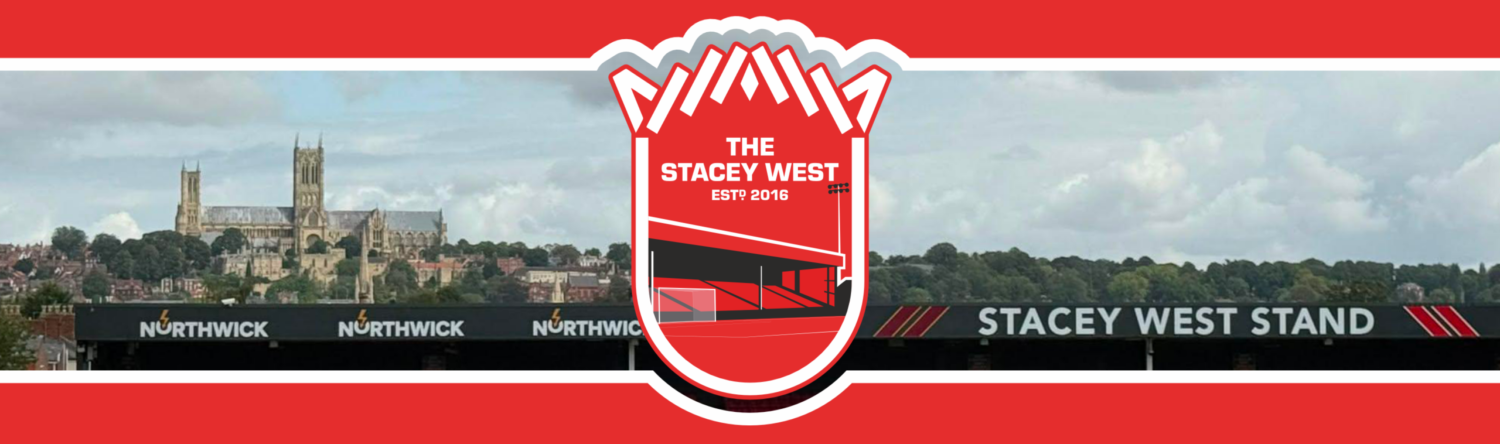
What followed was the most comprehensive rebuilding programme in the club’s history. The new St Andrew’s stand opened in November 1987, seating 1,400 and housing the directors, press, and offices. The Railway End and South Park stands were torn down in 1990, replaced by the Stacey-West Stand, a lasting memorial to Bill Stacey and Jim West, two lifelong supporters who perished at Bradford. Two years later, a new South Park structure with executive boxes and supporters’ bars opened its doors, followed by the family-focused stand beside St Andrew’s in 1994. The final piece arrived in 1995, when the open Sincil Bank terrace was replaced by the vast 5,700-seat Linpave Stand, transforming the ground into a fully modern arena. By 1999, with seats installed in the Stacey-West, Sincil Bank was officially an all-seater stadium with a capacity exceeding 10,000.
The total cost of the rebuild was around £3 million, which was shared between the City Council and the Football Trust, with countless hours of labour and support from local firms. It was a rebirth in every sense, a far cry from the wooden shacks and rope enclosures of the 1890s.

The Ground Returns To Club Ownership
In March 2000, Lincoln City completed the circle. Chairman John Reames oversaw the repurchase of Sincil Bank from the Council for £175,000, bringing the ground back under full club ownership for the first time in 18 years. It was both symbolic and practical, restoring control to the club and allowing the stadium to serve as collateral during another period of financial difficulty.
Over its long history, Sincil Bank has hosted far more than football. In June 1958, Queen Elizabeth II visited as part of a royal tour, while in May 1966 the terraces rocked to the sounds of The Who, The Kinks, and The Small Faces in what was arguably Lincoln’s most famous concert. Gainsborough Trinity even borrowed the ground for Football League fixtures when the Northolme was unavailable. There were cricket finals, boxing matches, wrestling nights, cycling meets and, perhaps most curiously, sheepdog trials during the “Holidays at Home” week of 1943.
Notoriously, it also played host to a Country and Western festival that was vastly undersold, costing the Commercial Manager his job. There was also a Westlife concert, which it is believed to have made good money, but for which the club got very little. It’s not always successful to host events at the Bank!

By the time the LNER sponsorship deal was announced in December 2019, the Bank had already witnessed more than a century of change. From open fields to modern grandstands, from volunteer labour to corporate partnerships, its story mirrors that of Lincoln City itself — a tale of persistence, community spirit and pride in identity.
Major Developments at Sincil Bank
1895 – Lincoln City move from John O’Gaunts Ground to a new site beside Sincil Drain; first match vs Gainsborough Trinity (friendly).
14 September 1895 – First Football League match played at Sincil Bank, against Woolwich Arsenal.
1896 – Small uncovered stand built at the South Park end; wire fence replaces rope around the pitch.
1898–1902 – Ground improvements led by the Working Men’s Committee; banking added and stands expanded.
1899 – Covered “Working Men’s Stand” (400 seats) erected on the Sincil Bank side.
1901 – Additional stand built behind the South Park goal; original moved to the south-east corner.
1902 – St Andrew’s Stand enlarged and set back to install a cycling and athletics track.
1908 – Storm destroys part of the St Andrew’s side; five spectators injured.
1915 – Ground consists of three covered stands (St Andrew’s, South Park, Sincil Bank sides) with full banking.
1925 – Small shelter built at the centre of the Railway End; offices and gym added under South Park stand.
1929 – Fire destroys the South Park stand and club offices; all records lost.
1929 – New 1,500-seat South Park stand completed within six weeks.
1929 – Club purchases Sincil Bank freehold from Colonel Swann for £4,875.
1931–32 – St Andrew’s Stand rebuilt (2,250 capacity); concrete terracing laid in front of St Andrew’s and South Park stands.
1936 – Lincoln Imp Social Club opens under the South Park stand.
1939–45 – Ground requisitioned by A.R.P. during World War II; falls into disrepair.
1945–47 – Concrete walls replace fencing; A.R.P. building converted into new dressing rooms.
1948 – Sincil Bank stand demolished; replaced by shale terracing, increasing capacity to 25,000.
1952–53 – Concrete terracing added on Sincil Bank side through Supporters Club funds.
1955 – Field behind St Andrew’s purchased for training and “A” team matches.
1962 – Floodlights installed, paid for by supporters.
1964 – New social club opens beneath South Park stand.
1967 – Record attendance of 23,196 vs Derby County in League Cup replay.
1975 – Wall behind South Park goal collapses during match vs Stoke City; terrace closed.
1977 – New, more powerful floodlights installed.
1982 – Ground sold to Lincoln City Council for £225,000 to secure club’s future; 125-year lease agreed.
1986 – Unsafe wooden St Andrew’s stand demolished; major redevelopment plan begins.
1987 – New St Andrew’s Stand opens (1,400 seats).
1990 – Railway End and South Park stands demolished; Stacey-West Stand opened, named after fans Bill Stacey and Jim West.
1992 – New South Park Stand (later known as Rilmac Stand) opens with 17 executive boxes.
1994 – Family Stand (later Poacher’s Corner) added next to St Andrew’s.
March 1995 – Linpave Stand completed on Sincil Bank side (5,700 seats); ground effectively rebuilt.
1999 – Stacey-West converted to seating; stadium becomes all-seater (capacity c.10,000).
March 2000 – Club buys back Sincil Bank from the Council for £175,000 under chairman John Reames.
2008 – England Under-16s defeat Scotland 2–0 at Sincil Bank to win the Victory Shield.
2010 – FIFA World Cup Trophy Tour visits Sincil Bank, paraded by Martin Peters.
- 2012 – Stadium named The 12th Imp Sincil Bank Stadium
2013 – Stadium briefly renamed Gelder Group Stadium.
2019 – London North Eastern Railway (LNER) announced as new naming-rights sponsor; Sincil Bank renamed the LNER Stadium.
2022 – Co-op Stand was renamed the GBM Stand.
2024–25 – St Andrew’s Stand was renamed the Greenlinc Renewables Stand under a multi-year deal.

You must be logged in to post a comment.